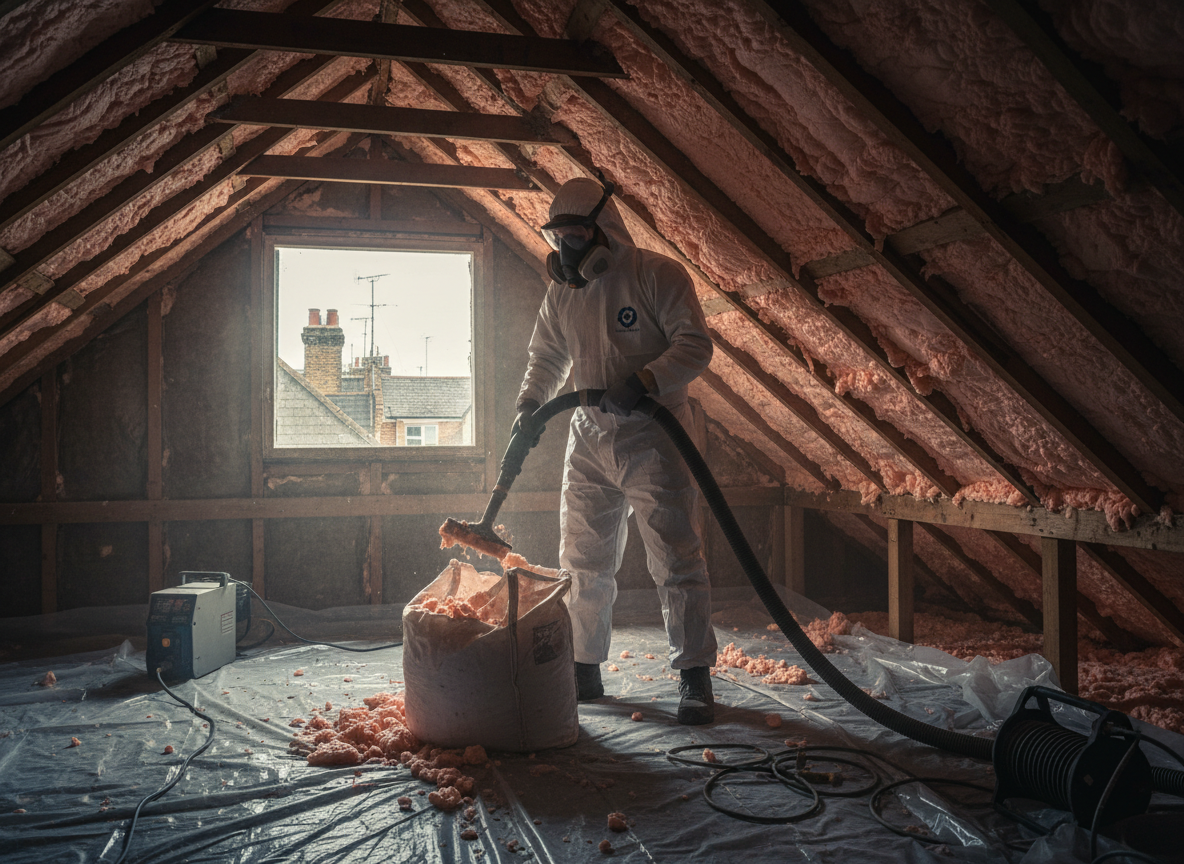
London's Victorian and Edwardian terraces often received spray foam insulation in lofts and cavity walls during the 2000s push for energy efficiency. The closed-cell material bonds tightly to lath and plaster or brick, and removal must avoid disturbing original horsehair plaster or timber joists that have settled over a century. Damp winters in the capital drive condensation when the foam prevents vapour escape, leading to hidden mould along party walls in areas like Islington and Hackney. Technicians use negative-air machines and sealed corridors to contain dust during extraction, then bag and remove all waste to licensed sites rather than leaving residue that could affect neighbouring properties.
Edge cases appear regularly in converted mews houses and basement flats where foam was applied over existing felt or bitumen. These layers can tear during pulling, releasing trapped moisture into floor voids. Crews inspect for timber decay with moisture meters before starting, and any affected joists receive localised treatment rather than blanket replacement. Building control records from the London boroughs sometimes require notification when work affects party walls, so the process includes checking planning history at the address before equipment arrives. Homeowners in stock-brick terraces around Camden frequently discover the foam has wicked water from leaking gutters, turning what looks like a simple loft clear-out into a multi-day job involving roof-edge repairs.
Disposal follows Environment Agency rules for polyurethane waste, with every load weighed and documented at the gate. Older foam formulations sometimes contain older blowing agents that require separate handling from modern open-cell products. After extraction, ventilation is restored by fitting new loft hatches or air bricks where previous installers had blocked them, reducing the risk of future condensation on the now-exposed brickwork. The work leaves the space ready for traditional insulation such as mineral wool or wood fibre boards that suit the breathable construction common in Greater London terraces.
Technician insight
In London, the thing that catches most people out with Spray Foam Removal near me is how quickly moisture builds behind the foam in unventilated Victorian terraces around areas like Brixton or Kentish Town once winter temperatures drop and the brickwork stays cold.
Loft foam removal in a South London terrace
Homeowner in a 1890s terraced house near Clapham noticed black mould along the ceiling. Inspection found closed-cell foam trapping condensation against the original lath and plaster. We set up containment, removed the foam in sections without cracking the ceiling, disposed of the waste, and opened two new air bricks to restore airflow.
How it works
- 1
Initial Site Assessment
Technician inspects loft or wall cavities, checks for damp, measures foam depth, and notes access constraints in the specific London property.
- 2
Containment Setup
Negative-air units and polythene barriers are installed to isolate the work area and protect adjacent rooms and neighbouring properties.
- 3
Mechanical Removal
Foam is cut and peeled in sections using specialist tools, with constant monitoring for hidden timber or plaster damage.
- 4
Clearance and Disposal
All material is bagged, removed from site, and taken to a licensed facility with full documentation provided to the client.
- 5
Ventilation Restoration
Air bricks or vents are reinstated or added to prevent future condensation once the foam is gone.
Pricing
Upfront quotes after on-site inspection; cost depends on access, foam thickness, and any hidden damp or plaster repairs needed.