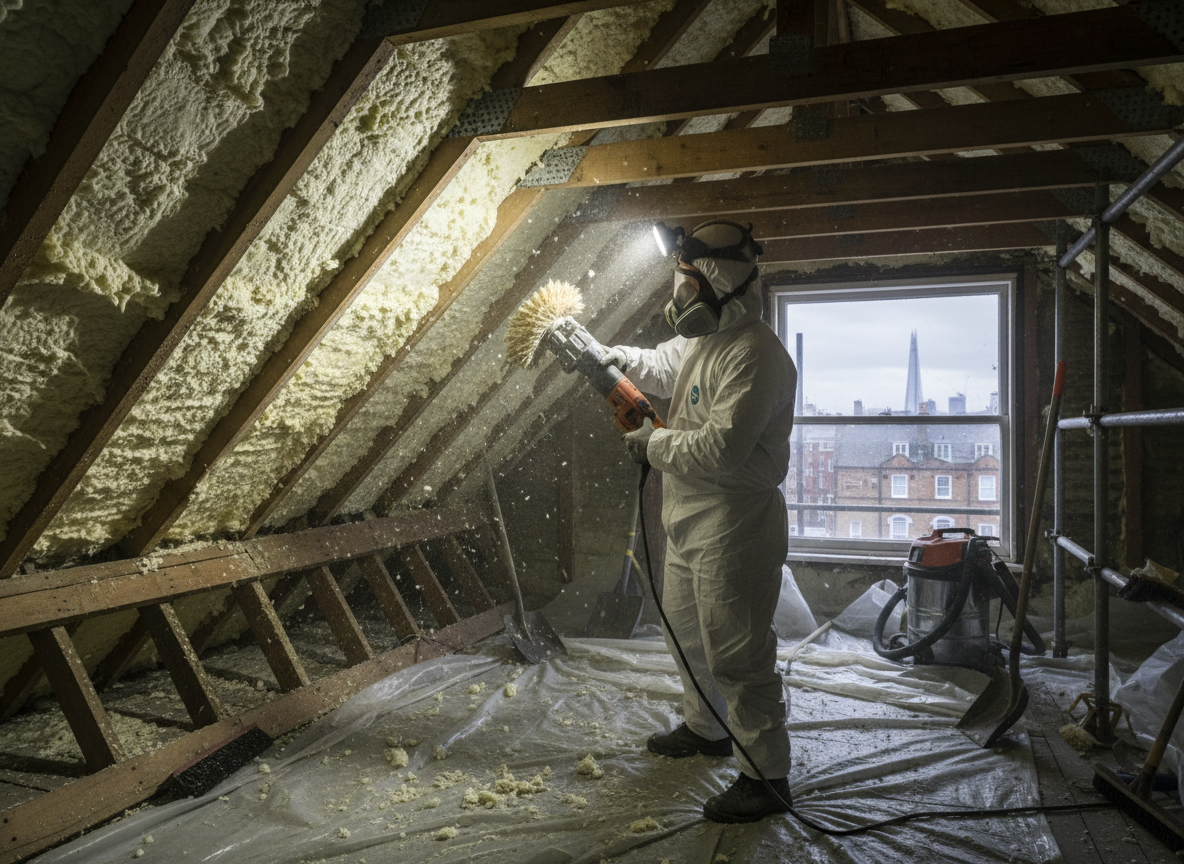
Open cell spray foam bonds tightly to lath and plaster ceilings common in London terraces built before 1910. Removal starts with careful scoring to avoid pulling down fragile horsehair plaster that has already been stressed by decades of roof leaks. In areas like Islington and Hackney, where many properties still have original lathe, technicians work in small sections so the ceiling stays intact while the foam is peeled away layer by layer.
Winter damp in the London area makes foam removal messier because moisture trapped behind the insulation turns the material spongy and heavier. This increases the risk of water staining on ceilings below once the foam is gone. Crews therefore cover floors and furniture thoroughly and use extraction fans to pull dust out through roof vents rather than letting it settle through the house.
After the bulk foam is stripped, residual cells left in the timber joists must be brushed out by hand. Any remaining film can stop new insulation from adhering later and may hide small rot pockets that developed under the original application. In Camden and Southwark stock-brick terraces, this inspection step often reveals timber that needs localised treatment before the roof is re-boarded.
Post-Removal Checks
Homeowners should expect a full loft inspection for hidden damp once the foam is gone. In London’s older roofs, removing the foam can expose slipped tiles or failed felt that were previously masked. Addressing these before re-insulating prevents repeat problems.
Technician insight
In London, the thing that catches most people out with open cell spray foam removal is the fragile lath and plaster in pre-1910 terraces around Islington and Hackney. One wrong pull and the ceiling comes down with the foam, turning a removal job into a full ceiling repair.
Camden Terrace Loft Clearance
Homeowner in a Camden terraced house noticed musty smells after heavy winter rain. Inspection found open cell foam trapping moisture against the original lathe. The foam was removed in sections over two days, damaged felt was replaced and the loft was left ventilated and dry.
How it works
- 1
Site Assessment
Technicians inspect the loft from the address at 80 Haymarket, checking access, plaster condition and any signs of prior leaks before quoting.
- 2
Containment Setup
Floors and stairwells are sheeted and negative air is established so dust does not migrate into living spaces below.
- 3
Foam Extraction
Open cell material is scored and peeled in controlled sections, with hand brushing to clear residue from joists and lathe.
- 4
Final Clean and Inspection
All debris is removed, the space is vacuumed and a moisture check confirms the roof structure is dry before handover.
Pricing
Cost depends on loft size, access difficulty and condition of original plaster; site visit required for accurate figure.